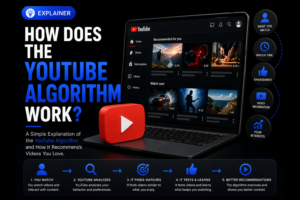

The YouTube algorithm uses multiple systems to help each viewer find videos they are likely to watch and enjoy. Recommendations consider personal interests, viewing behavior, and satisfaction, while Search also considers how well a video answers a query. For a business, the practical goal is to make useful videos for the right audience.
For Swedish small businesses, growth comes from useful videos for a defined audience, not random viral views. You need a clear topic, a convincing package, and Analytics data that tells you what to improve. A clear content marketing plan connects those videos to customer questions and business goals.
Key Takeaways
YouTube uses separate systems across different viewing surfaces.
Evaluate clicks alongside viewing behavior and viewer satisfaction.
Search rewards relevance and viewer response.
Shorts performance reflects viewing choices, watch duration, and satisfaction.
Tags have limited value compared with topic clarity.
High-intent videos produce stronger business outcomes.
YouTube Recommends Videos, Not Channels
YouTube does not operate as one single algorithm that treats every video the same way. It uses recommendation and ranking systems across Search, the Home page, Suggested Videos, subscriptions, and the Shorts feed. Each surface has a different viewer context.
A person searching “how to choose an accountant in Sweden” has a clear question. Someone opening the YouTube app at 21:00 may want entertainment, news, or a familiar creator. The platform reads those situations differently before deciding what to display.
Search Prioritizes Relevance and Response
YouTube Search considers relevance, engagement, and quality. It assesses how the title, description, tags, and video content match a query, along with engagement for that search. Quality includes signals of expertise and trustworthiness, particularly for topics where reliable information matters. Matching a keyword alone does not secure a ranking.
A video titled “How to Prepare Your Company for GDPR Questions” has a better chance of matching a relevant query than “Important Advice for Business Owners.” The first title makes a specific promise. The second forces the viewer to guess.
Home Page Learns From Individual Viewing Habits
The Home page is highly personalized. Two people in Gothenburg can open YouTube at the same time and see almost no identical recommendations because their viewing histories, subscriptions, and recent interests differ.
This is why a new business channel can grow without competing directly against the largest Swedish creators. YouTube needs evidence that a defined group watches your topic. It does not need every viewer in Sweden to care.
Suggested Videos Extend a Viewing Session
Suggested Videos usually appear next to or after another video. YouTube looks for content that viewers commonly watch in sequence, alongside topical relevance and personal behavior. Create follow-up videos that naturally answer the next question.
For example, a video about Google Ads budgets can lead into one about conversion tracking. Those topics belong in the same viewer journey.
Your channel niche gives YouTube a clearer audience to test.
Subscriptions Are Not Guaranteed Reach
Subscribers are valuable because they have already chosen your channel, but subscription status alone does not force impressions. If subscribers repeatedly ignore a new upload, YouTube receives a weaker signal than if they click and watch.
That does not mean you should chase every trend. It means your publishing promise must be clear enough that the right people recognize why the video is for them.
Clicks, Retention, and Satisfaction Work Together
A clear title and thumbnail help viewers decide whether to watch. YouTube also considers viewing behavior, satisfaction, and relevance to each person. Strong metrics do not guarantee more impressions because other videos compete for that viewer’s attention. Do not optimize for clicks alone.
Click-through rate, often shortened to CTR, measures how often viewers click after seeing an impression. A low CTR can mean the thumbnail is unclear, the title is too broad, or the video reached the wrong audience.
Titles Must Match a Real Viewer Question
Write titles around an outcome, decision, or problem. “5 Website Mistakes That Cost Swedish Businesses Leads” is more useful than “Website Tips.” It tells viewers what they will gain and who the information is for.
Avoid promises you cannot meet. A dramatic title can increase early clicks, but viewers leave quickly when the opening does not deliver. That mismatch damages retention and satisfaction.
Thumbnails Need One Clear Idea
A thumbnail works at a small size on a phone screen. Use a recognisable face, product, result, or short phrase where it fits, but avoid cramming in six design elements. On YouTube, clarity beats decoration.
For a B2B video, show the problem or outcome. A thumbnail for “Why Your Google Ads Spend Is Wasted” could use a simple dashboard image and two to four readable words. It should support the title, not repeat every word.
Retention Shows Whether the Video Delivers
Audience retention reports in YouTube Analytics show where viewers stop watching, replay, or continue. A steep drop in the first 30 seconds often means the opening was slow, confusing, or disconnected from the title.
Get to the answer quickly. State the problem, show what the viewer will learn, then begin. Skip long logo animations and broad introductions.
Satisfaction Goes Beyond Minutes Watched
YouTube uses feedback such as likes, dislikes, satisfaction surveys, and ‘Not interested’ or ‘Don’t recommend channel’ selections, alongside viewing and search history. These signals help personalize recommendations; they are not a published formula. Focus on useful content rather than trying to manipulate one metric.
A seven-minute explanation that answers a purchase question is stronger than a stretched 20-minute video full of repetition.
A precise promise and a fast payoff protect retention.
Search, Home, Suggested Videos, and Shorts Need Different Tactics
The best format depends on where you want the video discovered. Search content captures existing demand, while Home and Suggested Videos build broader awareness. Shorts can introduce your business quickly, but they need a different structure.
Choose one primary distribution goal per video. Trying to make every upload rank in Search, appear on Home, and work as a Short often creates unfocused content.
Search Videos Answer High-Intent Questions
Search is the best starting point for many small businesses because viewers already want an answer. Build videos around questions your sales team receives, product objections, service comparisons, and local buying concerns.
A Swedish accounting firm could create videos such as “What Does a Limited Company Need to File Each Year?” or “Sole Trader vs Limited Company in Sweden.” These topics attract viewers who are close to a decision.
Use the exact topic naturally in the title, opening, description, captions, and chapter labels. Do not repeat the same phrase excessively.
Home and Suggested Videos Build Familiarity
Home-page videos often succeed because they create curiosity for an audience that already has some interest in the subject. They need a broader angle and a thumbnail that is understandable in less than a second.
Suggested Videos work well in connected series. Publish a foundational video first, then record the next logical step. Link the series with end screens, cards where appropriate, and a verbal recommendation near the end.
A useful sequence could move from “How to Set Up Google Business Profile” to “How to Get More Google Reviews” and then “How to Respond to Negative Reviews.”
Shorts Win or Lose in the First Seconds
Introduce the result or problem promptly so viewers understand why to keep watching. YouTube considers whether people choose to view a Short, average view duration, average percentage viewed, and satisfaction signals such as likes and surveys. A strong opening helps, but there is no published one-to-two-second ranking threshold.
Shorts are useful for quick answers, product demonstrations, before-and-after examples, and clips from longer videos. Use them to direct attention toward a related long-form video when the viewer needs deeper help.
Do not assume Shorts viewers will automatically become long-form viewers. Build a bridge by keeping the topic and audience consistent.
Match Format to the Buyer Journey
Use Search videos for decision-stage questions. Use Home and Suggested Videos for trust-building stories, opinions, and problem awareness. Use Shorts for attention and simple education.
Need a content plan that connects video with SEO, paid media, and social channels? Explore Beast Productions’ social media marketing services to develop a practical production and distribution strategy.
Keywords Help YouTube Understand the Topic
Keywords matter because they help YouTube identify what your video is about, particularly in Search. They do not overcome poor viewer response. Relevance plus satisfaction beats keyword repetition.
Start with the language customers use. Review YouTube autocomplete suggestions, customer emails, website search data, and common sales questions. Google Search Console can also reveal phrases people use before they reach your website.
Put the Main Phrase in High-Value Places
Use the primary topic in your title and say it naturally near the start of the video. Add a clear description that explains the video in plain language, including related phrases and key details.
For a video about YouTube advertising, mention whether it covers campaign setup, targeting, budget, or measurement. A vague description gives YouTube and viewers less context.
Captions matter too. Upload accurate captions or review automatic captions, especially when industry terms, Swedish names, or product names are involved.
Tags Are a Minor Cleanup Tool
Tags are not the main ranking lever. Use a few relevant tags for common spelling variations, brand names, or terms YouTube may misread, but do not spend an hour building a tag list.
Spend that hour improving the title, thumbnail, opening, and structure instead. Those areas affect real viewer behavior.
Descriptions Support the Viewer After the Click
The first lines of a description should explain the benefit and topic. Add links to relevant pages, sources, products, or a related playlist below that. Avoid dumping unrelated keywords into the text.
If you sell locally in Malmö, Uppsala, or Stockholm, mention the location only when the video genuinely concerns local service delivery. Forced location terms weaken trust.
Use YouTube Analytics to Improve One Video at a Time
YouTube Analytics turns guesswork into decisions. Check it after a video has received enough impressions and viewing time to show a pattern, then change one major variable on the next upload. Do not react to a few hours of data.
For a new channel, a video may need days or longer before its discovery sources become clear. Search-led content can build gradually, while a Home-page recommendation can produce an earlier spike.
Start With Discovery Sources
Open the Reach tab and review where impressions and views came from: YouTube Search, Browse Features, Suggested Videos, Shorts feed, external sources, or channel pages. This tells you whether your actual strategy matched the result.
If a search-focused video receives most views from Suggested Videos, that is not a failure. It means YouTube has found a related viewing path, and you should inspect which videos send that traffic.
Compare CTR With Retention
High CTR with weak retention can mean the title or thumbnail overpromises, or that the opening and content do not deliver. Low CTR with strong retention may justify testing clearer packaging, but compare similar traffic sources and audiences first. When both are weak, review topic fit, the promise, and delivery. These patterns suggest what to investigate; they do not prove a single cause.
Look at the first 30 seconds, then compare average view duration across videos of similar length. Do not compare a 40-second Short with a 12-minute tutorial as if they have the same job.
Track Business Outcomes Outside YouTube
Views are not your final business metric. Add tracked links in descriptions, use a dedicated landing page, and review leads, booked calls, product enquiries, or newsletter sign-ups.
A video with 500 views from people researching a service can outperform one with 50,000 casual views. For most Swedish businesses, qualified attention is worth more than mass attention.
Review on a Practical Schedule
Use this simple review process after each upload:
Check discovery sources after the video has gathered initial traffic.
Inspect CTR and the first 30 seconds of retention.
Read comments for unanswered questions and confusion.
Compare performance with videos aimed at the same audience.
Choose one improvement for the next video.
Build a follow-up video if Search or Suggested traffic is strong.
This process takes less time than constantly rewriting old metadata, and it builds a reliable library of content.
Consistency Means Audience Fit, Not Daily Uploads
You do not need to publish every day to grow on YouTube. You need a schedule you can maintain while producing videos that consistently help the same audience. For a small business, a sustainable schedule of useful videos is more practical than rushed daily uploads.
Daily publishing often creates rushed topics, weak thumbnails, and videos with no clear purpose. It can also exhaust the person responsible for filming, editing, and responding to comments.
Choose a Sustainable Production Rhythm
A practical setup might include one filming session per month, two long-form videos, and several Shorts cut from the same material. Plan topics before the camera is switched on, including the title angle and viewer question.
Allow time for research, recording, editing, captions, thumbnail creation, and publishing; the work required varies with the format and production needs. Outsourcing production changes the time cost, but you still need internal subject expertise.
Keep a Narrow Topic Promise
A channel about “business advice” is too broad. A channel focused on digital visibility for local service companies gives viewers and YouTube clearer expectations.
You can expand later, but build depth first. Create clusters around one service area, such as local SEO, Google Ads measurement, or video marketing for property companies.
Plan for Seasonal Swedish Demand
Swedish business activity changes around Midsummer, summer holidays, Black Friday, and year-end planning. Record evergreen content before quieter periods and publish time-sensitive material early enough for viewers to act.
For example, a video about Black Friday advertising needs planning well before November. A video about summer staffing should appear before holiday schedules are already finalised.
Consistency is the repeated delivery of a useful promise, not a calendar streak.
Common YouTube Algorithm Mistakes That Waste Production Time
Weak results can reflect a mismatch between topic, packaging, and audience, but competition and changing viewer interests also affect reach. Use Analytics to investigate before deciding what to change.
The first mistake is treating every view as equal. A local roofing company does not need viewers worldwide who enjoy renovation clips but will never request a quote.
Misleading Clickbait Breaks Trust
Do not use a title or thumbnail that promises a result the video does not provide. You may get an initial click, but early exits tell YouTube that the viewer experience was poor.
Make the first 15 to 30 seconds confirm the promise. If the title says “Google Ads Budget for Small Businesses,” start with budget decision factors, not your company history.
Publishing Random Topics Confuses Audience Signals
A channel that posts one business tutorial, one gaming reaction, and one holiday vlog gives YouTube conflicting clues. Split unrelated content into separate channels or keep the business channel focused.
Even within a business niche, connect topics. A video about website conversion rates should lead naturally into landing pages, tracking, or paid traffic.
Overworking Tags While Ignoring the Video
Tags, upload timing, and hashtags receive too much attention because they are easy to change. They cannot repair a weak idea or a slow video.
Spend your effort in this order:
Audience question and topic selection
Title and thumbnail promise
Opening and structure
Useful examples and clear editing
Analytics review and follow-up content
Expecting Immediate Results From Every Upload
Some videos are slow builders. Search content may gain views for months when the topic stays relevant, while topical news content can fade within days.
Keep improving, but do not delete a useful video just because it did not perform in its first week. Update a misleading thumbnail or outdated description when needed, then make the next video stronger.
Conclusion
Start with one high-intent customer question, record a direct answer, and package it with a truthful title and thumbnail. Next, review the first 30 seconds of retention and the discovery source in YouTube Analytics. Then publish the next logical question for the same audience. That sequence gives YouTube clear signals and gives potential customers a reason to trust you.
Frequently Asked Questions
How long does it take for YouTube to recommend a new video?
YouTube does not promise a fixed recommendation timetable. Videos can reach viewers at different stages, including long after publication. Review performance after enough impressions and views have accumulated to make comparisons useful, and consider the traffic source instead of judging a video from its first few hours.
Does changing a YouTube thumbnail improve performance?
Yes, changing a thumbnail can improve performance if people see the video but do not click it. Change the thumbnail only when it better reflects the video’s actual promise; a higher CTR followed by poor retention is not an improvement.
Are YouTube tags still worth using?
Tags are worth a few minutes for spelling variations, names, and terms that automatic systems could misunderstand. They should never take priority over a focused topic, clear title, accurate captions, and a thumbnail that earns the right click.
Should a small business use YouTube Shorts or long videos?
Use both when they support the same customer journey. Shorts work for quick awareness and simple answers, while long videos build trust on complex decisions such as pricing, service comparisons, and implementation questions.