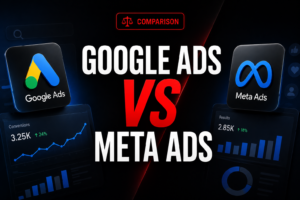

Google Ads vs Meta Ads is a choice about where and how to reach your next customer. Google Search Ads can capture demand when people actively search for an offer. Meta Ads can introduce an offer through Facebook and Instagram while people browse. Neither platform is universally cheaper or more profitable.
That distinction is a starting point, not a complete description. Google Ads also includes visual and video campaigns, while Meta can generate purchases and qualified leads as well as awareness. For a Swedish small business, the better first investment depends on customer demand, the offer, creative resources, and the ability to measure actual sales.
Key takeaways
- Compare Google Search with Meta discovery ads first, then consider other campaign types.
- Judge cost per qualified lead or profitable sale, rather than clicks alone.
- Match the ad, destination page, and follow-up to the same customer need.
- Budget for creative production, measurement, and account management.
- Add a second channel when it has a defined role and enough budget to test.
What is the main difference between Google Ads and Meta Ads?
Google Search gives you a chance to respond to an expressed need. Someone searching for “emergency electrician Uppsala” has supplied a useful clue about what they want. A relevant ad can connect that search with a service page and a clear way to call.
Meta advertising usually starts with a different situation: a person encounters an image, video, or offer while using a social platform. The ad must make the product or problem relevant before asking for action. This can suit products that benefit from demonstration, inspiration, or an explanation of an unfamiliar benefit.
Google’s wider advertising platform also supports discovery. Its campaign types include Search, Shopping, video, and campaigns spanning multiple channels. Do not assume every Google campaign reaches someone who has just searched, or that every Meta campaign is only for awareness.
When Google Search is a sensible first test
Consider Search when potential customers already use clear commercial queries, you serve those needs, and you have a relevant page. A Stockholm accountant could test searches for a specific bookkeeping service. A local installer could focus on a service area and the installation work the business actually wants.
Before deciding, inspect the available search demand and likely competition. A clear query does not guarantee a profitable customer. Some terms attract researchers, job seekers, or people outside your service area, and some markets have little relevant search volume.
When Meta is a sensible first test
Consider Meta when showing the product helps someone understand its value, or when the audience may not yet know what to search for. A Swedish furniture brand could demonstrate how a compact table fits a small apartment. A local workshop could show the experience a participant will have.
The offer still needs a useful next step. A product demonstration might lead to the matching product page; a complex service might lead to an introductory consultation. The right destination depends on how much information and trust a buyer needs.
Compare costs using business outcomes
There is no reliable universal answer to which platform has the lower acquisition cost. Auction conditions, audience, season, offer, creative, conversion rate, and reporting settings all affect results. A low cost per click can still produce expensive customers if few visitors buy.
For an online store, examine advertising cost alongside order value, product margin, delivery costs, discounts, and returns. For a service company, distinguish an inquiry from a qualified opportunity and a won customer. These are different outcomes and should not share one value in your decision.
Set an affordable acquisition cost
Start with the contribution a customer can realistically generate after the direct costs of serving them. Decide how much can go toward acquisition while leaving room for operating costs and profit. Include repeat purchases only when your own records support that expectation.
For lead generation, work backward from your actual sales process. If only some qualified leads become customers, your affordable cost per lead must reflect that conversion rate. Avoid comparing a Meta form submission with a Google campaign’s completed booking as if they were equivalent.
Include the work around the campaign
Media spend is only part of the investment. Search campaigns need keyword choices, useful ad copy, query reviews, and suitable pages. Visual campaigns need photography, video, editing, and new messages to test. Both need tracking checks and someone who responds to leads.
A channel with slightly higher advertising costs might still suit a small team if the business can support it consistently. Equally, existing product photography and video skills can make a visual campaign easier to maintain. Choose a workload your team can sustain.
Google Search and Shopping: making active demand useful
Keep services and landing pages aligned
Group campaigns around meaningful business needs. Roof repair and roof replacement can require different messages, pricing expectations, and destination pages. Sending both to a vague homepage makes it harder for the visitor to find the relevant next step.
Review the search terms available in your account and exclude clearly irrelevant traffic where appropriate. A hypothetical Gothenburg moving company might exclude job searches or vehicle rentals if it offers neither. Search-term reporting is useful evidence, but it is not a complete record of every search that triggered an ad.
Location settings also deserve a check after launch. Review where leads actually come from and whether your team can serve them. A broad geographic setting is not a substitute for looking at customer addresses and the quality of inquiries.
Use accurate product information for Shopping
Shopping ads use Merchant Center product data, rather than a conventional keyword list, to help match products with opportunities. They can show information such as a product image, title, and price. Retailers can use Shopping campaigns or Performance Max with a product feed.
Keep product data consistent with the store. A customer should find the advertised product, price, availability, and relevant delivery information on the destination page. Start with products whose margins and stock levels can support advertising instead of treating the entire catalogue as equally valuable.
When multiple retailers sell the same item, your page should explain practical reasons to buy from you. Clear delivery terms, accurate specifications, useful photographs, and responsive support can help the shopper decide. Advertising cannot compensate for an uncertain store experience.
Meta Ads: making discovery relevant
Build the message around a real customer benefit
A general instruction to “discover our collection” gives someone little reason to stop. Show what the product does, who it suits, or what makes an offer useful. A clothing brand might demonstrate fit and movement; a plant nursery could explain which plants suit a shaded balcony.
Choose creative that fits the placement. Meta’s Reels advertising guidance recommends creative designed for the mobile video format, including vertical framing and keeping key content within safe areas. Preview the ad so interface elements do not cover the product or message.
Prepare a small set of distinct ideas before launch. For example, compare a demonstration with an image focused on a specific customer benefit while keeping the offer and landing page consistent. This is a clearer test than changing the audience, product, price, and creative together.
Treat retargeting as a testable role
Retargeting can reconnect with eligible audiences who have already interacted with a business. It may be useful for product reminders or answering questions that prevented a purchase, but it is not automatically your most profitable activity. Some people would return without seeing another ad.
A small business may have too little eligible audience volume to justify many separate segments. Keep the structure manageable, inspect delivery and results, and avoid assuming that a high platform-reported return proves the ads caused all those purchases.
Plan for lead quality and follow-up
A form is the start of a sales process. Explain what the person will receive, what happens after submission, and how to reach your business. Ask only questions that help qualify or serve the inquiry, and make sure someone owns the response.
Record whether leads were relevant, contactable, and ultimately valuable. A social media advertising strategy should connect creative decisions to those business outcomes. More form submissions are not useful if the business cannot turn them into appropriate conversations.
Both platforms need a convincing destination
A focused destination page should continue the promise made by the ad. If someone clicks an installation offer, show the relevant service, area covered, proof of capability, and a clear contact action. If the ad features one product, help them find that product immediately.
Check the complete mobile journey before launch: page loading, product choices, forms, payment, and confirmation. Explain delivery or response expectations. Remove avoidable friction before increasing traffic. Relevant website design and development work can address these problems alongside campaign improvements.
Do not judge the page only by appearance. Read customer questions and look at where the process becomes confusing. A beautiful page that omits essential information can still lose qualified visitors.
Measure Google Ads and Meta Ads consistently
Define the outcome before comparing dashboards. Decide what counts as a purchase, qualified lead, booked meeting, or completed phone inquiry. Test the relevant measurement and check that one action is not accidentally recorded multiple times.
Both platforms may claim credit for one customer journey. Someone can encounter an Instagram ad, later click a Google ad, and buy. Differences in attribution windows, view-based reporting, consent, and measurement can also produce different totals. Do not add both platforms’ attributed sales together and present the sum as unique orders.
Use business records alongside platform reports
Check reported purchases against actual orders and lead campaigns against your sales records. Use consistent date ranges and allow for the time between inquiry and purchase. For a longer sales cycle, today’s advertising may produce an opportunity whose value becomes clear later.
Website analytics can add context about how visitors arrive and interact, but it will not necessarily match each advertising platform exactly. Look for explanations before assuming one system is wrong. Document your reporting rules so the same comparison can be repeated.
A practical review sequence
- Confirm that the intended conversions are being recorded correctly.
- Compare spend with qualified opportunities, orders, and business value.
- Review available search terms and creative performance for clear mismatches.
- Check landing pages, mobile usability, and lead response quality.
- Choose one meaningful next test and record what you expect to learn.
React promptly to broken tracking or clearly irrelevant spend. For performance decisions, consider the volume of evidence and normal buying cycle. There is no fixed number of days that makes every campaign test conclusive.
How should a small business divide its budget?
Start with a channel that has a credible role in the buying journey and enough budget to learn. Splitting a small amount among many audiences, products, and campaign types can leave each test with too little evidence.
A hypothetical local installation firm could begin with relevant Search campaigns if people already look for its services. A visually distinctive consumer brand could begin with Meta demonstrations if education is the main obstacle. These are starting hypotheses, not guaranteed winners for every business in those categories.
Use both when each has a clear job. Meta could introduce an unfamiliar product while Search reaches people who later investigate the category. Both can also reach returning prospects. Assess the combined business result as well as each dashboard, since their reported contributions can overlap.
Conclusion: choose a test you can support
The Google Ads vs Meta Ads decision should follow demand, customer behavior, and business economics. Start with a relevant offer, a usable destination, reliable measurement, and a manageable test. Expand when your results support the next investment.
If you need help judging search demand or campaign performance, Beast Productions can review your setup through its Google Ads services. Bring campaign results and actual sales outcomes so the decision rests on more than click costs.
Frequently asked questions
Is Google Ads more expensive than Meta Ads?
Neither is always more expensive. Compare the cost of qualified leads or profitable sales, including creative and management work. A lower click price does not by itself show better value.
Which should a local Swedish business try first?
Google Search is a reasonable first test when there is relevant local demand. Meta may suit an offer that benefits from demonstration or awareness. Verify the opportunity and your ability to support the campaign before allocating the budget.
Can both platforms generate sales?
Yes. Both support advertising aimed at business outcomes, including purchases and leads. The campaign type, conversion goal, offer, creative, and customer journey matter more than a simple search-versus-social label.
Can I use both with a small budget?
You can, but each test needs enough evidence to be useful. Start with one clear objective and add the second platform when it fills a specific gap. Avoid dividing a limited budget across many small campaigns.